Sunflower Oil Supply Remains Stable Despite Factory Halts Amid Security Risks
Ukrainian agricultural experts confirm that domestic sunflower oil supplies are secure, as the country consumes only 10% of its total production despite temporary plant closures.
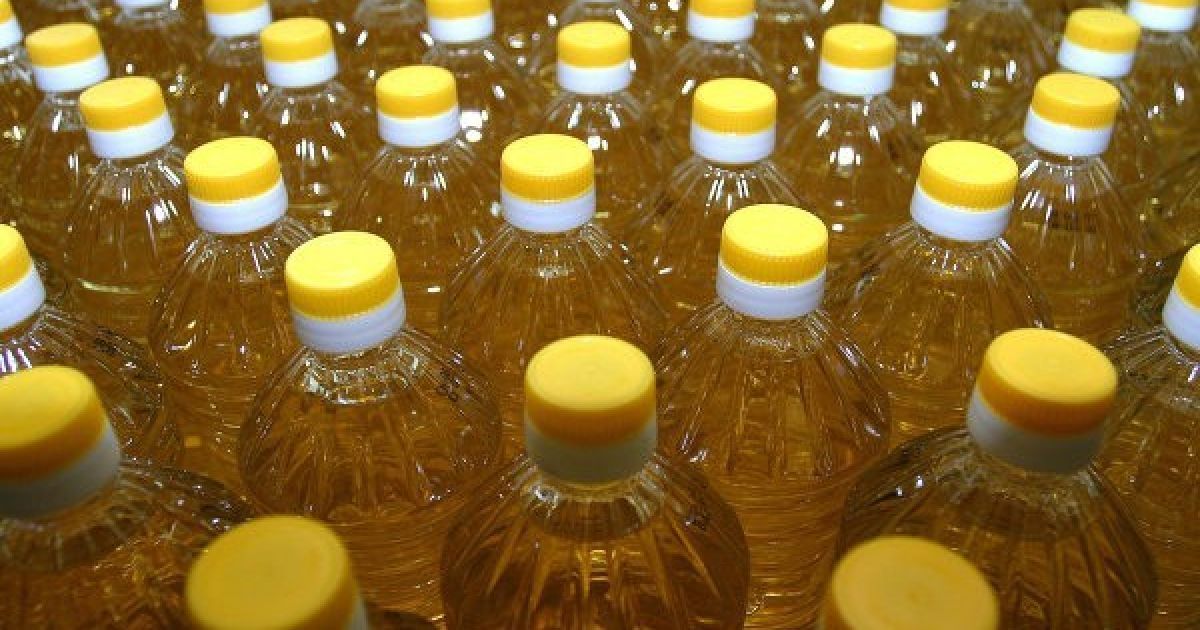 💼Economy
Photo: TSN
Key points
- Ukraine consumes only 10% of its sunflower oil production domestically.
- Kernel and other plants halted operations temporarily for safety reasons.
- Monthly exports significantly exceed the annual domestic requirement.
In recent weeks, concerns regarding a potential sunflower oil shortage in Ukraine have circulated in the media. These fears were triggered by reports of temporary shutdowns at several large oil-crushing plants. However, agricultural experts and Ministry officials are urging the public to remain calm, emphasizing the country's high level of self-sufficiency in this sector.
Production Capacity and Safety Measures
The suspension of operations at major enterprises, including plants owned by the Kernel agro-holding, is a forced measure driven by security risks. Recent attacks on industrial infrastructure have damaged equipment and storage tanks, creating a risk of large-scale fires if continuous technological cycles are maintained. According to the Ministry of Agrarian Policy, these steps are primarily aimed at protecting personnel and preserving remaining assets.
Denys Marchuk, deputy head of the All-Ukrainian Agrarian Council, compared the current situation to the early months of the full-scale invasion. Back then, logistics hubs were also targeted, leading to brief delivery delays of 7-10 days, but supplies never fully ceased. "There is no need to panic; there will be plenty of oil. We consume no more than 10% of the total volume we produce domestically," the expert stated.
Statistics and Export Performance
- Ukraine is capable of shipping approximately 300,000 tons of oil per month.
- The annual domestic demand is only about 400,000 tons.
- In the first half of November alone, Ukraine exported 230,000 tons of sunflower oil.
These figures demonstrate that even with a partial reduction in processing capacity, existing stocks are more than sufficient to meet domestic needs for many months. The Ministry of Agrarian Policy plans to conduct a thorough analysis over the next month to assess long-term impacts, but no shortage is currently forecasted.
"We are completely self-sufficient," Denys Marchuk summarized, noting that Ukraine remains a top global producer.
For the residents of Chortkiv, this means that oil shortages in local shops are highly unlikely. Any potential risks are more likely related to price fluctuations caused by complex logistics and rising energy costs rather than a physical lack of product.
Source TSN — tsn.ua/groshi/oliyni-zavody-zupyniaiutsia-chy-bude-defitsyt-produktu-v-… ↗
Read next
 🚨Events
Electricity Restored in Rivne Region After Russian Attack
Electricity has been restored in the Sarny district of the Rivne region after a Russian attack. The head of the Rivne Regional Military Administration, Oleksandr Koval, a…
 🎭Culture & Sport
Autumn Rose Care: Pruning Tips for Chortkiv Gardeners
Experts explain why it is best to avoid radical pruning of roses until steady frosts arrive.
 🛡️Security
Estonia affirms Ukraine's right to self-defense following incident in the Gulf of Finland
Estonian Foreign Minister Margus Tsahkna stated that the strike on a Russian vessel is a consequence of Russian aggression, supporting Ukraine's right to defend itself.
 🛡️Security
Elderly woman rescued from rubble in Dymer: death toll rises
Search and rescue operations continue in the Kyiv region following a drone strike on a residential building. The death toll from the attack has reached nine.
 🛡️Security
Russian corvette reportedly hit by Ukrainian drones in Libya
A Russian military corvette, the 'Mercury', was severely damaged by an explosion in the port of Benghazi, with sources suggesting a potential Ukrainian drone strike.
 🛡️Security
Russia tests NATO defense algorithms through airspace violations, says Dmytro Kashchenko
Military expert Dmytro Kashchenko suggests that Russian incursions into NATO airspace are calculated probes of the Alliance's eastern flank readiness.